
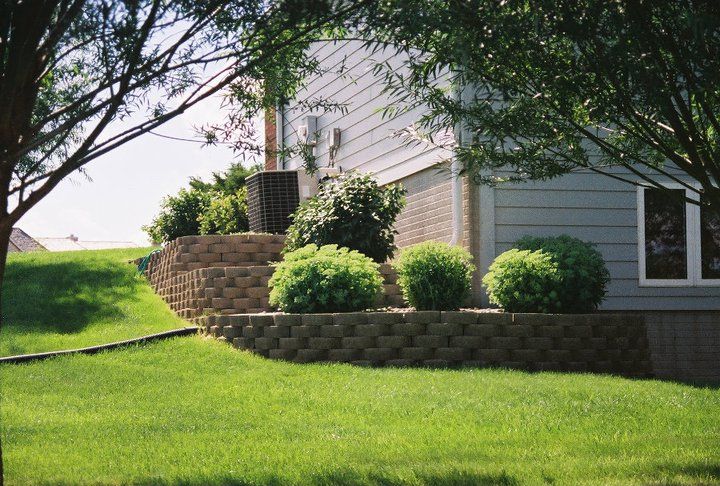
Retaining walls absolutely help with drainage, erosion control, and expanding usable yard space—especially in hilly Siouxland neighborhoods. They hold back soil, prevent washouts during heavy rains, and create flat, functional areas where sloped ground used to be. For homeowners in Sioux City, IA, South Sioux City, NE, and Dakota Dunes, SD, a well‑designed retaining wall can transform both the look and performance of a yard.
Below, Mosher Landscaping explains how retaining walls work, why drainage planning is essential, and how the right materials can solve long‑term landscape challenges.
Why Retaining Walls Are So Important in Siouxland
Our region’s rolling terrain and clay-heavy soils create unique challenges for homeowners. Rainwater tends to pool, slopes wash out easily, and backyards can become uneven or unusable. Retaining walls address all of these issues by stabilizing soil, redirecting water, and reshaping the landscape in a way that’s both functional and beautiful.
Whether you’re dealing with a steep backyard in Sioux City or a shifting embankment in South Sioux City or Dakota Dunes, a properly engineered wall can make a dramatic difference.
How Retaining Walls Control Erosion
Erosion is one of the biggest landscape problems throughout the Siouxland area. When soil gets saturated after heavy rain or spring snowmelt, it can slide, shift, or wash away. This not only damages landscaping but can also threaten foundations, patios, fences, and other structures.
Retaining walls work by creating a strong barrier that holds soil in place. By capturing and stabilizing the slope, the wall stops the natural downward movement of the ground. This is especially important in neighborhoods with significant elevation changes or newly constructed homes where the soil hasn’t fully settled.
Improving Drainage: The Key to a Long-Lasting Wall
One of the most common questions homeowners ask us is, “Do retaining walls help with drainage?” The answer is yes—when they’re built correctly. In fact, proper drainage behind the wall is just as important as the wall itself.
Here’s how Mosher Landscaping integrates drainage solutions to ensure stability and longevity:
- Gravel backfill: A layer of clean, angular rock helps water flow downward instead of building up behind the wall.
- Perforated drain tile: A buried pipe collects and redirects water away from the wall to a safe discharge point.
- Geogrid reinforcement: Used on taller or steeper slopes, geogrid strengthens the soil and reduces pressure on the wall.
- Proper grading: Sloping the ground so water naturally moves away prevents pooling near foundations or patios.
When standing water builds up behind a retaining wall, it creates hydrostatic pressure, which is the number-one cause of wall failure. This is why expert design and installation matter—especially in areas like Sioux City, South Sioux City, and Dakota Dunes, where soil composition varies from yard to yard.
Creating More Usable, Level Yard Space
For many Siouxland homeowners, sloped yards make parts of the property practically unusable. Retaining walls fix this by reshaping the terrain to create flat spaces for patios, play areas, garden beds, and walkways.
Here are a few examples of how walls help maximize outdoor living areas:
- Terracing steep yards to create multiple level areas
- Expanding patio space for seating, grilling, or outdoor kitchens
- Building raised beds for easier gardening and improved aesthetics
- Creating defined transitions between functional outdoor zones
Homeowners are often surprised by how much additional space a retaining wall can create. “I never realized we could actually use this part of the yard,” is something we hear often during final walkthroughs.
Material Options for Siouxland Retaining Walls
Choosing the right material depends on your style preferences, budget, and the conditions of your yard. Mosher Landscaping installs a variety of options tailored to Siouxland’s climate.
Segmental Block Retaining Walls
These are the most common type of retaining wall in Sioux City and surrounding areas. They’re engineered for strength, come in many colors and textures, and interlock for stability. They’re ideal for everything from small garden walls to large structural retaining systems.
Natural Stone Retaining Walls
For homeowners who want a more timeless, organic look, natural stone is a premium choice. Stone walls blend beautifully into landscapes and are especially popular in higher-end neighborhoods throughout Dakota Dunes and Whispering Creek.
Boulder Retaining Walls
Boulder walls offer rustic appeal and incredible durability. Large limestone or granite boulders work well for steep slopes and larger-grade changes. They’re also great for creating natural-looking transitions in backyard landscapes.
Timber or Wood Retaining Walls
Wood walls offer a more economical option and a warm, natural appearance, although they typically have a shorter lifespan due to moisture exposure. They can still be a great solution for smaller garden terraces or decorative features.
Why Professional Grading Makes All the Difference
Good grading is one of the most overlooked parts of retaining wall construction. Grading ensures water drains away from foundations, patios, and outdoor living spaces. Poor grading can cause standing water, soil settlement, and lawn damage.
Mosher Landscaping evaluates how water moves across your entire property—not just the area around the wall—to create a long-term solution that keeps everything functioning properly.
How Retaining Walls Improve Outdoor Living
Beyond structural benefits, retaining walls add significant beauty and functionality to your space. With thoughtful landscape design, walls can become standout features rather than just structural necessities.
Here’s how retaining walls enhance outdoor living:
- Create defined entertainment areas around patios and fire pits
- Serve as built-in seating for gatherings
- Add depth and dimension to flat or open yards
- Anchor landscaping with elevated planting beds
- Increase property value through improved structure and visual appeal
Many homeowners love how retaining walls help their yard feel more intentional, polished, and easier to maintain.
When to Consider a Retaining Wall
If you’ve noticed any of the following issues, a retaining wall may be a smart investment:
- Soil washing away after storms
- Mud lines or standing water near the foundation
- Slopes that make mowing difficult
- Cracked or leaning sidewalks, patios, or driveways
- Backyard areas that feel unusable due to slope
A quick property inspection can reveal whether a wall would help stabilize and improve your outdoor space.
FAQ
Do retaining walls help with drainage?
Yes. When built with gravel backfill, drain tile, and proper grading, retaining walls actively direct water away from problem areas and reduce runoff.
Will a retaining wall give me more usable yard space?
Absolutely. Retaining walls create level ground that can be used for patios, play areas, garden beds, and more.
How tall can a retaining wall be?
Most residential walls range from 2–6 feet, but taller walls are possible with engineering and proper reinforcement.
What’s the most durable material?
Segmental block and natural stone offer excellent long-term performance in Siouxland’s freeze–thaw climate.
Does Mosher Landscaping design and install retaining walls?
Yes—we handle everything from design to excavation to construction. You can explore examples on our Retaining Walls
and Landscape Design & Installation
pages.
Ready to stabilize your yard, prevent erosion, and create more usable outdoor space? Contact Mosher Landscaping today to schedule your property consultation and start planning a better, safer, more functional landscape.