
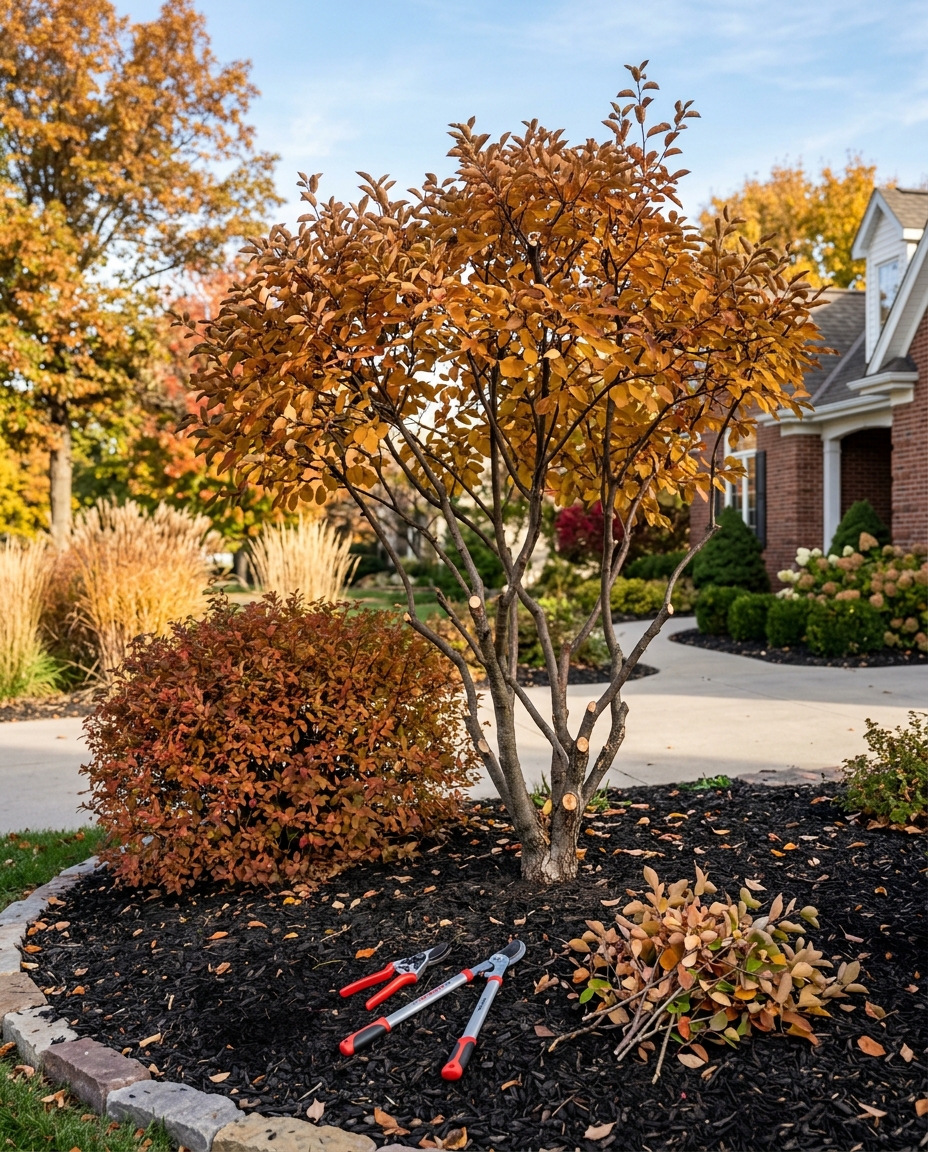
October is an important month for landscape care in Sioux City—but when it comes to pruning, the right approach matters more than simply cutting everything back. Fall is the time to assess your trees, shrubs, and perennial beds; remove specific problem growth; clean up the landscape; and make a professional plan for what should be pruned now versus what should wait until late winter.
At Mosher Landscaping, we help homeowners and commercial property managers protect the health, appearance, and long-term structure of their landscapes. With more than 70 years of combined horticultural experience, our team understands that thoughtful fall pruning is about preparing plants for the season ahead without creating unnecessary winter stress.
Why October Is the Time to Focus on Pruning
After a full growing season, October gives property owners a clearer view of what needs attention. Damaged branches, spent perennials, crowded growth, and areas affected by disease or storm damage are easier to identify as plants begin to slow down for the year.
Addressing these issues before winter helps keep beds tidy, reduces places where pests and disease can overwinter, and prepares your property for snow and ice. It also gives you time to schedule appropriate dormant-season pruning for trees and shrubs that should not be cut back heavily in fall.
Fall Pruning Is Not One-Size-Fits-All
A common mistake is assuming every shrub and tree should be trimmed back in October. In reality, timing depends on the plant. Heavy fall pruning can encourage tender new growth or remove next year’s flower buds, leaving plants more vulnerable to winter damage or reducing blooms in spring.
That is why professional guidance is valuable. Our team evaluates each planting for its species, age, condition, and role in the landscape before recommending a course of action. In many cases, October is the right time for selective cleanup and corrective work—not aggressive shaping or major reduction.
What Can Be Addressed During Fall Cleanup
October landscape maintenance often includes carefully removing growth that is dead, damaged, diseased, or creating a safety concern. This kind of selective pruning supports a cleaner, more manageable property as winter approaches.
Fall pruning and cleanup may include:
- Removing dead, broken, or storm-damaged branches
- Cutting back spent herbaceous perennials when appropriate
- Removing diseased plant material from beds
- Clearing low branches that interfere with walkways or visibility
- Cleaning up overcrowded growth around entrances, signs, and hardscapes
- Removing debris that can trap moisture or harbor pests
These targeted services improve appearance while helping keep your landscape ready for the changing weather.
Protecting Your Property Before Snow and Ice
Overgrown branches and neglected plant beds can create more than an appearance issue. Low limbs can obstruct sidewalks, driveways, lighting, and sightlines. Dense vegetation near buildings may hold moisture against surfaces or make routine fall and winter maintenance more difficult.
For commercial properties, keeping entries, walkways, and parking areas clear is especially important before snow removal season begins. A fall maintenance visit can identify plant material that may interfere with safe access or winter operations and help prevent avoidable problems once snow arrives.
Perennial Cutbacks Create Cleaner Spring Beds
Many perennials benefit from fall cleanup, particularly when foliage is diseased, collapsing, or no longer contributing to the appearance of the landscape. Removing spent material can help reduce the spread of certain plant diseases and makes spring cleanup more efficient.
However, some perennials provide winter interest, seed for birds, or extra protection for their crowns during cold weather. A knowledgeable maintenance team can help determine which plants should be cut back and which should be left in place until spring. This is one more reason a personalized plan provides better results than a blanket approach.
Why Major Tree and Shrub Pruning Often Waits
While October is a great time to inspect woody plants and remove obvious hazards, most major pruning for deciduous trees and many shrubs is best scheduled for late winter or early spring. At that point, plants are dormant, branch structure is easier to see, and pruning cuts can begin to recover as spring growth returns.
Spring-flowering shrubs, such as lilacs, forsythia, and weigela, require special care because they set buds for the next season on growth made earlier in the year. Cutting them back heavily in fall may remove the very buds that would have produced next year’s flowers. A professional can identify these plants and create a pruning schedule that protects their bloom performance.
Fall Is the Best Time to Build a Pruning Plan
Even when a plant should not receive heavy pruning in October, now is still the best time to make a plan. During a fall evaluation, Mosher Landscaping can identify:
- Dead or damaged branches needing removal now
- Overgrown shrubs that should be renewed in late winter
- Spring-blooming plants that need post-bloom pruning next year
- Plants that need relocation, replacement, or improved spacing
- Areas where trimming will improve access, safety, or curb appeal
This proactive approach keeps the work organized and prevents the last-minute scramble that often happens when spring schedules fill quickly.
Preserve the Shape and Health of Your Landscape
Proper pruning is not about making every shrub look like a perfectly rounded ball. It is about preserving each plant’s natural form, improving air movement where appropriate, removing unhealthy growth, and helping the entire landscape feel balanced.
With Mosher Landscaping, your fall maintenance plan can be coordinated with the rest of your property care, including planting-bed cleanup, mulch, edging, lawn improvements, and winter preparation. That continuity helps your landscape look intentional in every season—not just immediately after a trim.
FAQ
Should all trees and shrubs be pruned in October?
No. October is ideal for inspection, cleanup, and removal of dead or damaged growth, but many woody trees and shrubs should receive major pruning during the dormant season. The right timing depends on the plant species and its condition.
Can pruning in fall damage my shrubs?
It can if heavy pruning is done at the wrong time. Some plants may produce vulnerable new growth, while spring-flowering shrubs can lose the buds that would become next year’s blooms. Selective pruning and a plant-specific plan help avoid these problems.
Why should I remove dead or damaged branches before winter?
Dead and damaged branches are more likely to break under snow or ice. Removing them can improve safety, reduce damage risk, and keep your landscape looking clean through winter.
Do perennials need to be cut back in fall?
Some do, especially when foliage is diseased or collapsing. Others are best left standing for winter interest, wildlife value, or added protection. A professional can recommend the right approach for your beds.
Does Mosher Landscaping provide fall landscape maintenance in Sioux City?
Yes. Mosher Landscaping provides seasonal landscape maintenance for residential and commercial properties throughout Sioux City and Siouxland. We can help assess pruning needs, complete appropriate fall cleanup, and plan future work for healthier, more attractive plants.
October is the right time to give your landscape a closer look. Contact Mosher Landscaping to schedule a fall maintenance assessment and prepare your property for a cleaner, safer, and stronger season ahead.