
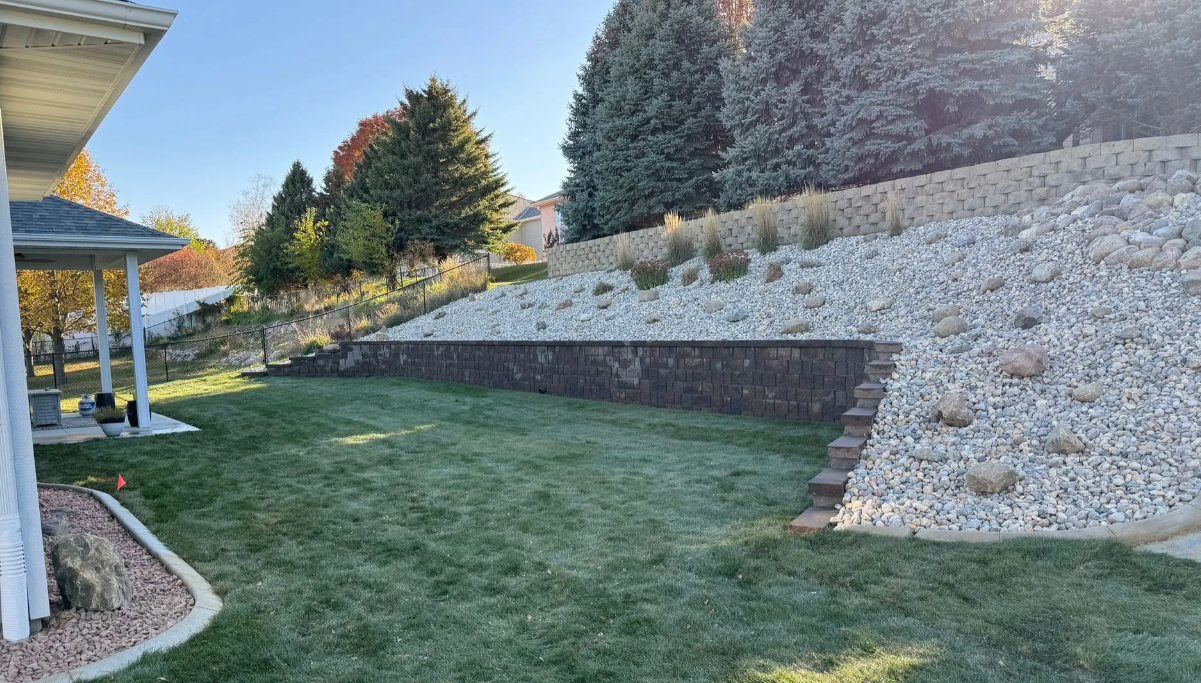
Homeowners across Sioux City know how quickly heavy rain or spring snowmelt can turn a yard into a soggy, uneven, or erosion‑prone mess. Between clay-heavy soils, natural slopes, and aging neighborhood grading patterns, yard drainage issues are incredibly common in our region. The good news? With the right combination of yard drainage solutions, proper landscape grading, and professionally built retaining walls in Sioux City, these problems can be corrected for the long term.
At Mosher Landscaping, we’ve spent decades helping homeowners protect their properties from water damage while improving the beauty and functionality of their outdoor spaces. Below, we break down the most frequent drainage issues we see in Sioux City yards—and how retaining walls can play a major role in fixing them.
Why Drainage Problems Are So Common in Sioux City
Drainage challenges in the Siouxland area are often caused by a combination of factors:
- Clay soils that hold moisture instead of letting it drain naturally
- Naturally sloped terrain that sends water toward homes or low spots
- Older neighborhood grading that no longer directs water properly
- New construction runoff affecting existing homes
- Compacted soil from years of lawn traffic or equipment
Left untreated, these issues lead to erosion, unhealthy lawns, foundation damage, and unusable outdoor spaces. Thankfully, most can be corrected with targeted design and construction.
Poor Grading That Causes Water to Pool
One of the most common drainage issues we see in Sioux City is improper grading. Over time, soil settles, shifts, or erodes, creating low spots that collect water. This standing water not only damages turf, but also increases the risk of basement moisture and mold growth.
Professional landscape grading restores the correct slope and directs water away from the foundation. When the yard’s natural layout doesn’t allow for ideal grading, retaining walls become essential for reshaping the land and creating proper flow paths.
Water Flowing Toward the House
Foundations are especially vulnerable to drainage issues. Even a small slope that angles toward the home can cause water to seep into basements, damage concrete, or saturate soil around the structure.
Corrective grading works for mild cases, but when the elevation difference is significant, a retaining wall can help create a stable, high point that prevents water from moving toward the home. Combined with gravel backfill and drainage tile, retaining walls offer long-term protection.
Erosion on Sloped Yards
Many Sioux City properties sit on natural hills or have steep transitions between levels. Heavy rainfall moves quickly down these slopes, washing away soil, mulch, and plant material.
Retaining walls are one of the most effective ways to combat erosion. By converting steep slopes into tiered, usable spaces, walls slow water movement and keep soil securely in place. This is especially valuable for homeowners wanting to improve large hillside yards or stabilize aging slopes.
Water Pooling in Low Spots
Low areas—often created by settling over time—become muddy, unpleasant, and unusable. Grass thins, weeds thrive, and the rest of the yard can be affected by excess moisture.
Solutions vary depending on severity. Some yards benefit from adding soil and regrading, while others require French drains or dry creek beds. When the entire yard needs elevation adjustments, retaining walls help restructure the layout so water flows where it should.
Runoff From Neighboring Properties
Sioux City’s rolling terrain means many homeowners receive water from adjacent yards. Even well-designed properties can struggle when a neighboring slope channels runoff directly onto the lawn.
A combination of retaining walls, swales, and underground drainage systems can redirect incoming water without causing conflict or damage.
How Retaining Walls Solve Drainage Problems
Retaining walls are far more than decorative—they’re one of the most powerful structural tools for managing water. When properly designed and installed, a retaining wall helps:
- Redirect surface water away from the home
- Stabilize sloping ground and prevent erosion
- Create level areas for planting or outdoor living
- Reduce pressure on soil prone to shifting or washout
- Support proper drainage systems behind the wall
Behind each wall, drainage rock and perforated tile are installed to relieve hydrostatic pressure. This prevents water buildup, which is the number one cause of wall failure when DIY or poorly built walls are installed.
Signs You May Need a Retaining Wall
If you’re noticing any of the following, it may be time to explore retaining wall options:
- Repeated mulch washout after storms
- Soil erosion or exposed roots
- Standing water for 24–48 hours after rain
- Sloped areas that are unusable or unsafe
- Water pooling near the home’s foundation
- Shifting or collapsing older walls
These issues rarely improve on their own—most worsen with time and seasonal freeze-thaw cycles.
What to Expect From a Proper Drainage Evaluation
When Mosher Landscaping evaluates a drainage problem, we look at the entire property, not just the trouble area. Water moves across a yard in patterns, and solving one issue often requires understanding the bigger picture.
A full evaluation typically includes:
- Identifying grading patterns and slopes
- Locating low spots or erosion zones
- Assessing soil type and compaction
- Reviewing foundation, patio, and hardscape impacts
- Proposing solutions that may include grading, drains, or retaining walls
This comprehensive approach ensures the root cause—not just the symptoms—is addressed.
FAQ
How do I know if my yard needs drainage work?
Standing water, erosion, dead patches of lawn, or water near your foundation are common signs. If these issues persist after rain, it’s time to have a professional evaluate the yard.
Are retaining walls always required for drainage problems?
No, but they’re essential when elevation changes prevent water from draining naturally. Walls reshape terrain so water can be directed safely away from structures.
How long does a retaining wall last?
A professionally installed wall with proper drainage can last several decades with minimal maintenance.
Do retaining walls help with foundation protection?
Yes. By managing water flow and reshaping grade, retaining walls keep moisture away from basements and foundations, preventing long-term structural issues.
Does Mosher Landscaping build retaining walls in Sioux City?
Yes—we specialize in both retaining wall construction and complete yard drainage solutions throughout the Sioux City region.
If you’re struggling with water issues or want expert guidance on yard drainage solutions, landscape grading, or retaining walls in Sioux City, our team at Mosher Landscaping is here to help. Now is the perfect time to schedule an evaluation and protect your yard for seasons to come.